


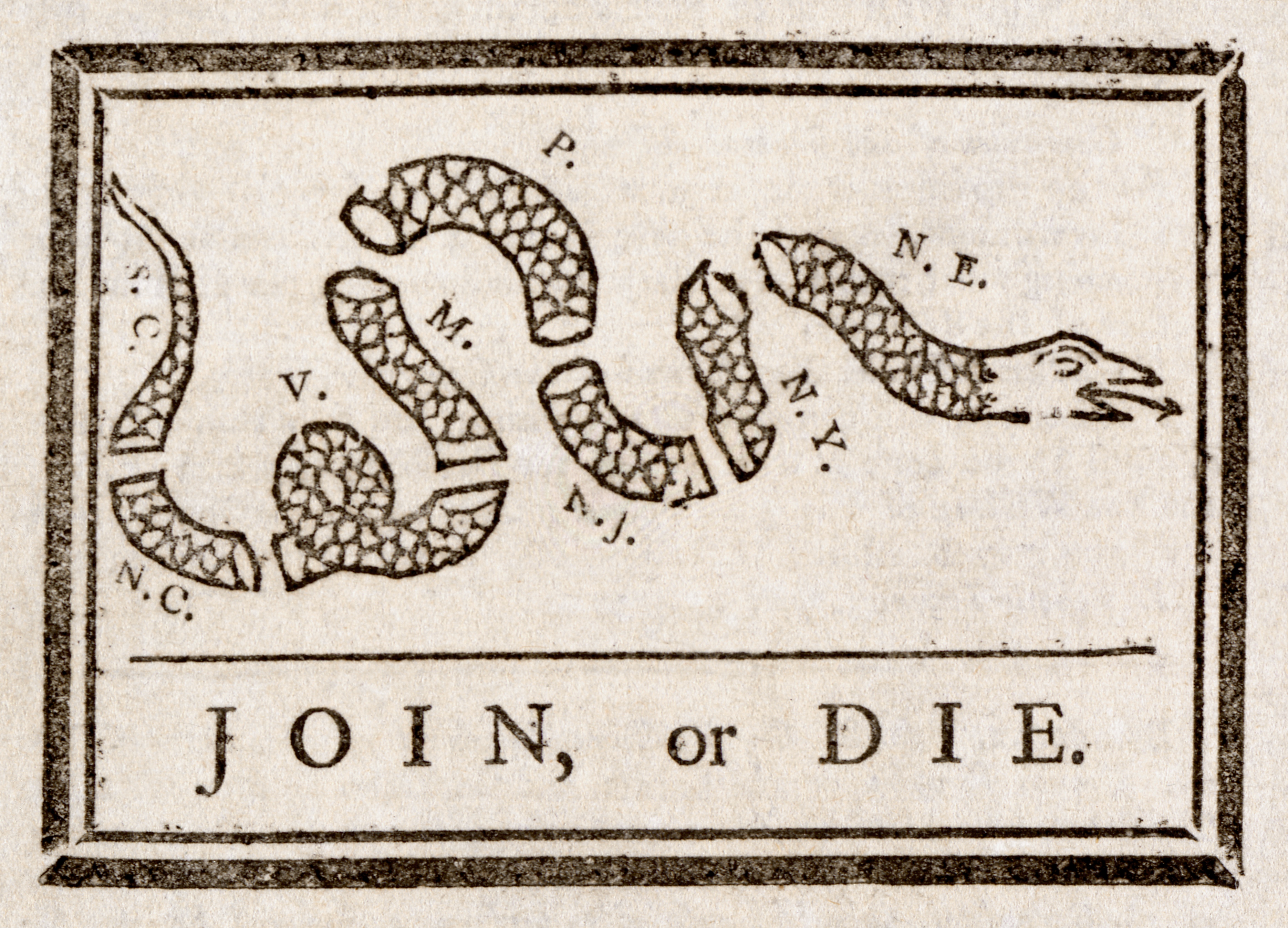
The Libertarian Party of Texas is at a crossroads. Years of factional fighting and declining growth have put our survival at risk, but with mutual cooperation, innovation, and a renewed focus on recruitment, we can chart a new course and secure our future.
The Divide
As most of us are painfully aware, the United States is in the middle of a blazing-hot culture war. We now find ourselves living with two unique cultures in America, increasingly divided along the left/right spectrum. What began as differences in values and perspectives has hardened into opposing identities, each with its own media, heroes, and narratives about what the country should be. Both major political parties have chosen their side in this divide, amplifying the split rather than bridging it. As a result, the culture war has consumed politics itself, turning every policy debate into a battlefield for broader cultural dominance rather than a search for practical solutions.
The Libertarian Party is not immune to this war, and we have seen the same war raging within the party for years. Much like the broader culture war, it has infected almost everything we do, coloring our debates, shaping our leadership contests, and fracturing our sense of common purpose. State affiliates across the country have been torn by factions that mirror the left-right divide outside our party, with disputes over messaging, priorities, and tone often overshadowing the principles that brought us together in the first place. At the national party, these same battles have played out in highly visible and often destructive ways, leaving the impression that we are more concerned with fighting each other than advancing liberty. Instead of uniting around a shared vision of reducing government power and expanding individual freedom, we have fallen into the same partisan tribalism we see across the country.
The Iceberg Ahead
There is a major problem lurking just beneath the surface, one that too few recognize because all attention is fixed on the ship’s wheel. While factions fight over who gets to steer, the course itself remains uncorrected, and the dangers ahead draw closer. The focus on winning control of the helm has blinded many to the fact that the entire vessel is at risk, and if we do not shift our attention to the iceberg in our path, it will not matter who was steering when we hit it.
So what is this looming threat? The iceberg ahead is attrition. Traditionally, the Libertarian Party offset attrition with one major event every four years: our presidential race. This has long served as our primary recruitment drive, a moment when national attention briefly turns our way and we can showcase our message to millions of disillusioned voters. During these cycles, we have typically seen a large surge of new members, an influx of donations, and a wave of fresh volunteers energized by the campaign. For many, the presidential race was their first entry point into the party, the spark that turned curiosity into commitment.
But in 2024, the influx we anticipated failed to materialize. Instead of energizing the party, our presidential race became a lightning rod for division. The usual synergy between the national organization and the presidential ticket never emerged. Instead, the national party, along with several state affiliates, openly worked against our nominee. This created confusion among members and fractured any hope of uniting behind the campaign. The candidate himself carried baggage, having antagonized a large portion of the party only two years earlier. His campaign choices compounded the problem, abandoning proven tactics like online money bombs and high-energy regional rallies, and relying instead on small, closed-door fundraisers in private homes. On top of this, voters were presented with more third-party and independent options than in a typical year, further diluting the protest vote that often boosts the Libertarian tally. The result was almost no momentum, no influx of donations, and no wave of new volunteers. While factions continue to argue over who is to blame, the fact remains that the reinforcements we have come to rely on, the ones that appeared like clockwork every four years, are simply not coming. This brings us to the real question: how do we survive another four years?
The Stakes are High
With ballot access in Texas carrying a price tag that can reach between one and two million dollars, simply holding the line and keeping the party intact becomes not just a priority, but a necessity. With the iceberg of attrition looming ahead, our survival as a political party is in real jeopardy. It is not enough to keep doing what we are currently doing, repeating the same habits while hoping for different results. If we fail to adapt, if we fail to organize and innovate, the crash will come, and the Libertarian Party of Texas will be reduced to little more than a historical footnote. To avoid that fate, we must take bold and deliberate action now, strengthening our infrastructure, shoring up our fundraising, and investing in outreach that grows both our membership and our influence. Only by steering decisively can we hope to avoid the collision course with certain failure and chart a path toward long-term viability.
Some members within the party seem to be under the impression that all of our woes would be instantly cured if we simply purged their political opponents from the ranks. What they fail to realize is that we are standing at a breaking point, a true sink-or-swim moment for our future. Attrition has already begun to take its toll, slowly draining away the people and resources we need to function. Every volunteer who walks away leaves a gap in our operations, every donor who stops giving weakens our ability to sustain ballot access and outreach, and every voter who drifts to another option reduces our influence at the polls. The reality is that losing even ten percent of our volunteers, our donors, or our voters would not just set us back, it would push us beyond the breaking point into a crisis from which recovery may not be possible.
Join, or Die
In 1754, Benjamin Franklin sketched a political cartoon depicting a snake cut into pieces, each labeled with a colony or region. The cartoon urged unity among the colonies during the French and Indian War. Later, in the 1760s and 1770s, it was revived as a rallying cry for colonial unity against British rule. Over time, it became one of the most famous symbols of American independence and collective action.
As a party that rejects collectivism and embraces individualism, it should come as no surprise that we have a hard time uniting behind a cause to achieve a collective goal, but as long as we plan to survive as a political party, we must unite under one banner. We must become a big tent party.
This does not mean silencing dissent or erasing differences, but it does mean recognizing that our shared principles of liberty bind us more tightly than our disagreements divide us. The colonies in Franklin’s time were hardly uniform; they had different economies, cultures, and even faith traditions. Yet when faced with the prospect of subjugation, they found common ground in the idea that liberty was worth preserving. The Libertarian Party must learn the same lesson. If we allow our internal rivalries to dominate our thinking, then we will fracture into pieces too small to matter.
Unity in a Libertarian context should never be about conformity; however, we must prioritize mutual cooperation toward a higher purpose. We can continue to debate strategy, tone, and even philosophy, but when it comes time to defend ballot access, support candidates, and spread the message of liberty, we must present ourselves as one party. Our survival depends on it.
If we fail to do so, then Franklin’s cartoon quickly becomes a prophecy of what is to come. A divided snake cannot strike. A party that spends more energy fighting itself than fighting for liberty will not only have zero impact on Texas politics, but it will also fail to survive. Our choice is the same as theirs was: join, or die.
Charting a New Course
Continuing as we have for the last several years will ultimately sink the ship. Our survival depends on actively building the party from the ground up. That means a massive overhaul of how we recruit and retain new members. It also means creating a culture that allows for disagreement without undermining one another, a culture where collaboration takes priority over conflict. Factional fights drain energy, burn out our best people, and distract from our mission.
The Libertarian Party of Texas has the best volunteer staff in the world. We are not only actively upgrading the infrastructure needed for a new wave of recruitment, dusting off old recruitment and development strategies, and innovating new programs, but we are also witnessing a real-time culture shift among the vast majority of our volunteers toward mutual cooperation. Progress is happening, and we are starting to see the rudders turn. That said, we could easily lose all of this momentum if factionalism engulfs the party during the upcoming convention cycle.
This is the moment for each and every one of us to act decisively. This is our “Join, or Die” moment. If we unite behind our shared principles, support our members, and commit to both proven and new strategies, we can turn the tide. The direction we choose now will determine whether we steer safely past the iceberg or stay the course and strike it. There is no room for half measures or endless factional squabbles. For the Libertarian Party of Texas to survive, we must move forward as one. One Party, One Mission.